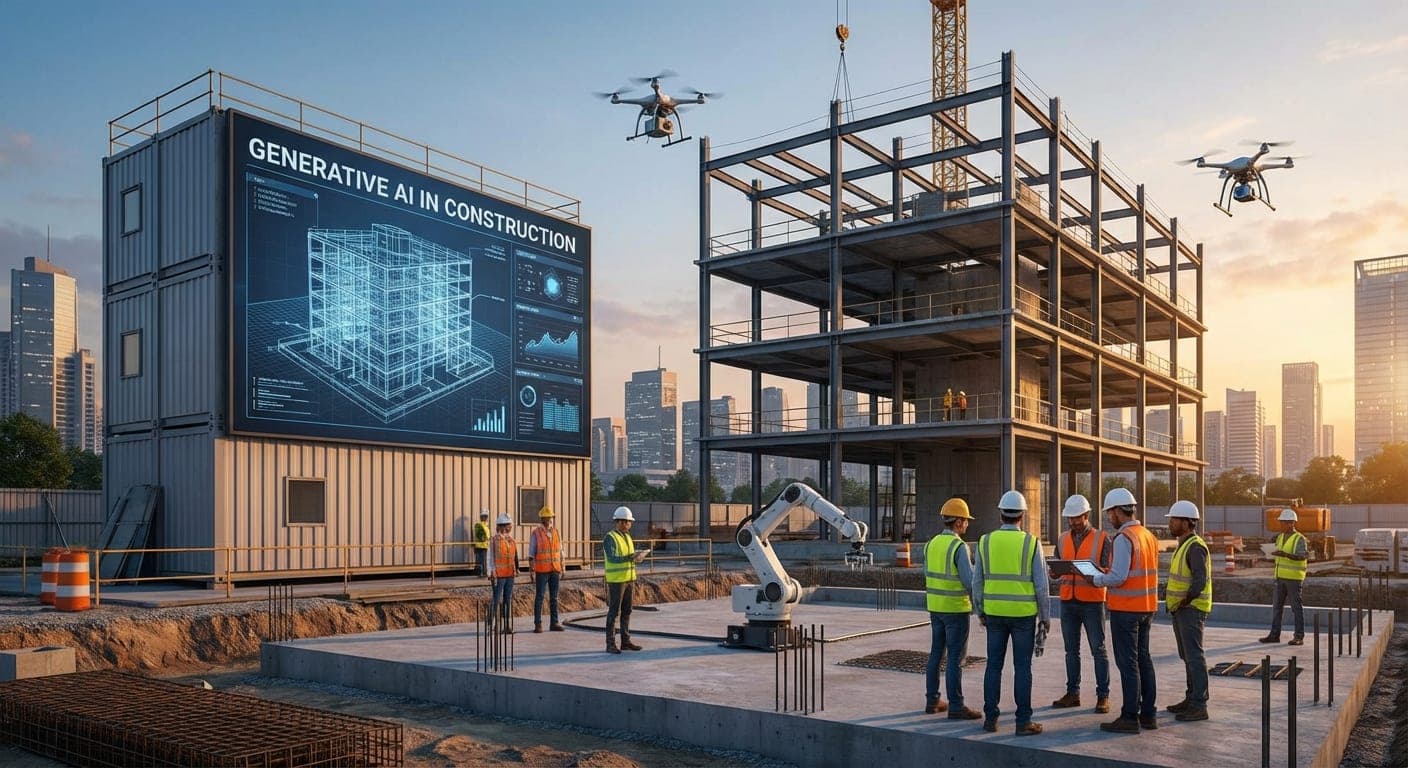
The construction industry, often seen as a bedrock of tradition, is no stranger to innovation. From ancient engineering marvels to modern modular construction, we’ve consistently adopted tools that enhance efficiency, safety, and profitability. Today, a new wave of technology is commanding attention: Generative AI. While the buzz around large language models and creative AI tools might feel abstract, this technology is rapidly moving beyond hype, offering tangible, transformative potential for contractors willing to look closer.
This isn't just about chatbots or automating mundane tasks; Generative AI refers to algorithms capable of creating new content—from designs and plans to code and text—that is original and contextually relevant. For construction, this means moving from merely analyzing existing data to actively generating solutions, optimizing processes, and even designing elements that we haven't yet conceived. It's about empowering your team with an intelligent co-pilot, not replacing their expertise.
Practical Applications: Where Generative AI Transforms Construction
Let's dive into concrete ways Generative AI can reshape your operations, providing a competitive edge and fostering unprecedented levels of efficiency and innovation.
1. Design & Pre-construction: Intelligent Blueprinting
- Generative Design: AI can explore thousands of design variations for structures, components, or entire site layouts, optimizing for factors like cost, material usage, structural integrity, energy efficiency, and regulatory compliance far faster than human designers. This includes optimizing MEP systems, façade designs, or even rebar placement.
- BIM Enhancement: Automatically generate detailed BIM models from sketches or point cloud data, or enrich existing models with intelligent data about material properties, cost estimations, and scheduling implications, identifying clashes and proposing solutions proactively.
- Site Optimization: Develop optimal crane placement strategies, material staging areas, and logistics plans that minimize travel time and maximize safety based on site conditions and project requirements.
2. Project Planning & Management: Streamlining Operations
- Intelligent Scheduling: Generate optimized project schedules that account for resource availability, weather patterns, supply chain delays, and interdependencies. AI can dynamically adjust schedules in real-time as conditions change, providing proactive alerts and revised pathways.
- Risk & Contract Analysis: Analyze complex contracts, identify potential risks, missing clauses, or favorable terms. Generative AI can also draft standard contract clauses, change orders, and legal documents, ensuring consistency and compliance while saving significant legal review time.
- Resource Allocation: Optimize the allocation of labor, equipment, and materials across multiple projects, predicting future demands and identifying potential shortages or surpluses.
3. On-Site Efficiency & Safety: Proactive Solutions
- Predictive Maintenance: Generate maintenance schedules for heavy machinery based on real-time sensor data, predicting failures before they occur and ordering necessary parts, minimizing downtime.
- Safety Protocol Generation: Develop site-specific safety plans and protocols by analyzing project plans, environmental conditions, and historical incident data, identifying unique risks and generating comprehensive mitigation strategies.
- Training & Onboarding: Create personalized training modules, safety briefings, and equipment operation guides, tailored to individual learning styles and specific project contexts.
4. Business Development & Client Engagement: Crafting Connections
- Proposal & Bid Generation: Quickly generate highly customized and compelling project proposals, bids, and marketing materials by drawing from vast databases of past projects, client preferences, and industry best practices.
- Marketing Content Creation: Produce engaging website copy, social media posts, and case studies that highlight your firm's expertise and project successes, reaching a wider audience more effectively.
- Client Communication & Reporting: Automate the generation of progress reports, status updates, and customized client communications, ensuring transparency and fostering stronger client relationships.
Getting Started: A Strategic Roadmap for Contractors
Embracing Generative AI doesn't require a complete overhaul overnight. Here's how to approach it strategically:
- Identify Key Pain Points: Start by pinpointing areas in your operations where manual processes are slow, error-prone, or costly. These are prime candidates for AI-driven solutions.
- Prioritize Data Quality: Generative AI models are only as good as the data they're trained on. Invest in data collection, organization, and cleansing to ensure your AI tools produce reliable and relevant outputs.
- Start Small with Pilot Projects: Don't try to implement AI everywhere at once. Choose a manageable project or department to pilot a specific Generative AI application, measure its impact, and learn from the experience.
- Invest in Training & Upskilling: Empower your workforce. Provide training on how to interact with AI tools, interpret their outputs, and leverage them to augment their existing skills.
- Collaborate with AI Specialists: Consider partnering with technology providers or consultants who specialize in AI for construction to guide your implementation and tailor solutions to your specific needs.
- Address Ethical & Security Considerations: Be mindful of data privacy, intellectual property, and algorithmic bias. Establish clear guidelines for AI usage and ensure robust cybersecurity measures are in place.
The Future is Now: Building Smarter
Generative AI is not a futuristic fantasy; it’s a powerful set of tools available today, ready to redefine efficiency, innovation, and profitability in construction. By moving beyond the initial hype and focusing on practical applications, contractors can unlock unprecedented value, streamline complex workflows, and foster a more adaptive and resilient business. The future of construction is being built now, and Generative AI is an essential part of the blueprint.
- Focus on Value: Always tie AI adoption back to clear business objectives: cost savings, time reduction, quality improvement, or enhanced safety.
- Embrace Iteration: AI implementation is an ongoing journey. Be prepared to refine, adapt, and scale your AI initiatives based on feedback and results.
- Foster a Culture of Innovation: Encourage your teams to experiment with new tools and ideas. The greatest gains will come from those who are open to evolving their methods.