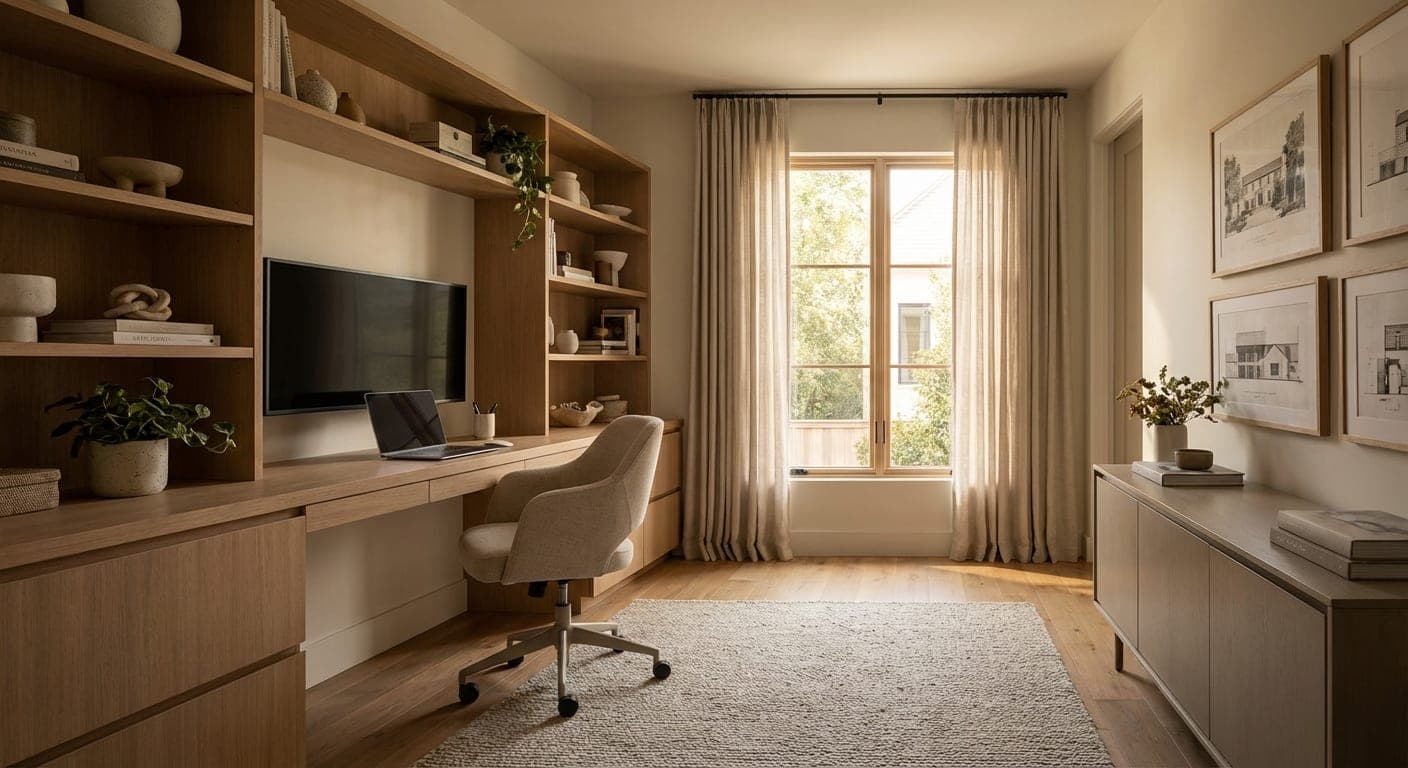
The landscape of work has fundamentally shifted, with the home office transforming from a luxury to an essential space for millions. For contractors and remodelers, this presents a significant opportunity. Understanding current home office design trends isn't just about aesthetics; it's about meeting evolving client demands, delivering functional excellence, and offering integrated solutions that stand out in a competitive market. Here, we delve into the key trends shaping modern home office design, offering insights to elevate your next project.
Embracing Ergonomics and Wellness
Beyond a simple desk and chair, clients are now prioritizing their health and comfort in their workspaces. This trend emphasizes designs that support physical well-being and reduce strain throughout the workday.
- Adjustable Sit-Stand Desks: A must-have for many, requiring careful consideration of power access and cable management solutions that can accommodate varying heights.
- Ergonomic Seating: Clients are investing in high-quality chairs; ensure the design allows ample space and doesn't conflict with built-in elements.
- Natural Light Optimization: Maximizing natural light exposure through larger windows, strategic window placement, or even sun tunnels. Consider motorized blinds or smart glass for glare control.
- Biophilic Elements: Integrating plants, natural wood finishes, and views of nature to improve mood and air quality. Custom shelving for plants or built-in planters can be an attractive addition.
- Circadian Lighting: Advanced lighting systems that mimic natural daylight cycles, adjusting color temperature and intensity throughout the day to support energy levels and sleep patterns.
Dedicated and Zoned Spaces
The days of working from the kitchen table are fading. Clients seek clear boundaries between work and home life, leading to a demand for truly dedicated or cleverly zoned office spaces.
- Purpose-Built Rooms: Converting spare bedrooms, attics, or even basements into fully functional offices. This often involves new flooring, insulation, and comprehensive electrical upgrades.
- Clever Zoning in Open Plans: For homes without a spare room, creative solutions like built-in room dividers, half-walls, or strategically placed custom cabinetry can define an office nook within a larger living area.
- Soundproofing: A critical request for many, especially those in shared living spaces or with young children. Focus on solid core doors, sound-dampening insulation in walls/ceilings, and acoustically rated windows.
- Smart Door Solutions: Barn doors, pocket doors, or French doors can offer aesthetic appeal and space-saving benefits while providing a sense of enclosure.
Seamless Technology Integration
Modern home offices are hubs of technology. Clients expect their workspace to be not only functional but also visually clean and intuitive to use.
- Hidden Wiring & Cable Management: A top priority. Custom millwork with integrated channels, floor boxes, and "power towers" within desks ensure a clutter-free environment.
- Integrated Charging Solutions: Wireless charging pads built into desktops or shelves, and USB-C power outlets as standard.
- Smart Home Connectivity: Lighting, temperature, security, and audio systems integrated for effortless control via voice or app.
- Robust Network Infrastructure: Ensuring reliable Wi-Fi coverage and wired Ethernet drops for high-speed, stable internet access, especially for video conferencing.
Multi-functional and Flexible Designs
As homes become more adaptable, so do home offices. Many clients need their workspace to serve more than one purpose, reflecting a desire for efficiency and versatility.
- Convertible Furniture: Think Murphy beds paired with integrated desks, or dining tables that double as large workspaces.
- Modular Storage Solutions: Systems that can be reconfigured as needs change, offering flexibility for files, supplies, and personal items.
- Flexible Lighting: Layered lighting (ambient, task, accent) with dimming capabilities to adapt to various activities and times of day.
- Guest Room Combinations: Designing an office that can comfortably host guests when needed, often incorporating thoughtful storage for work items when the room is in "guest mode."
Personalization and Aesthetics
The home office is no longer a purely utilitarian space; it's an extension of the homeowner's personal brand and the overall home aesthetic. Clients want a space that inspires and reflects their style.
- Custom Built-Ins: Bespoke shelving, cabinetry, and desk units that maximize space and integrate seamlessly with the room's architecture.
- Premium Finishes: High-quality wood, stone, and metal accents, along with designer wallpapers or unique paint colors.
- Statement Lighting: Decorative pendants or unique sconces that add character and enhance the overall design.
- Art and Decor Integration: Spaces designed to beautifully display artwork, awards, or personal collections.
Practical Advice for Contractors
Staying ahead of these trends requires a proactive approach and a keen eye for detail.
- Deep Client Consultation: Go beyond surface-level questions. Understand their work habits, technology needs, collaboration requirements, and long-term vision for the space.
- Prioritize Infrastructure: Think about electrical loads, network cabling, and HVAC considerations early in the planning process. These foundational elements are difficult and costly to change later.
- Showcase Solutions: Have examples or mood boards of integrated technology, smart storage, and ergonomic features ready to present to clients.
- Partner with Specialists: For advanced smart home systems or highly customized millwork, consider collaborating with specialized partners to deliver comprehensive solutions.
- Stay Informed: Regularly research new products, materials, and technologies in both interior design and smart home integration to offer cutting-edge solutions.
Clear Takeaways
The demand for sophisticated home office spaces is here to stay. By mastering these design trends, contractors can significantly enhance their value proposition:
- Offer Integrated Solutions: Don't just build, integrate. Think about the entire ecosystem of work within the home.
- Focus on Client Wellness: Ergonomics and natural elements are not just fads; they are core requirements for a productive and healthy workspace.
- Embrace Technology: Seamless tech integration and robust infrastructure are expected, not optional.
- Provide Flexibility and Personalization: Clients want spaces that adapt to their lives and reflect their unique style.
- Be a Consultant, Not Just a Builder: Guide your clients through the possibilities, positioning yourself as an expert in creating high-performance home offices.
By understanding and proactively implementing these trends, you can ensure your projects not only meet but exceed client expectations, solidifying your reputation as a leader in modern home design and construction.