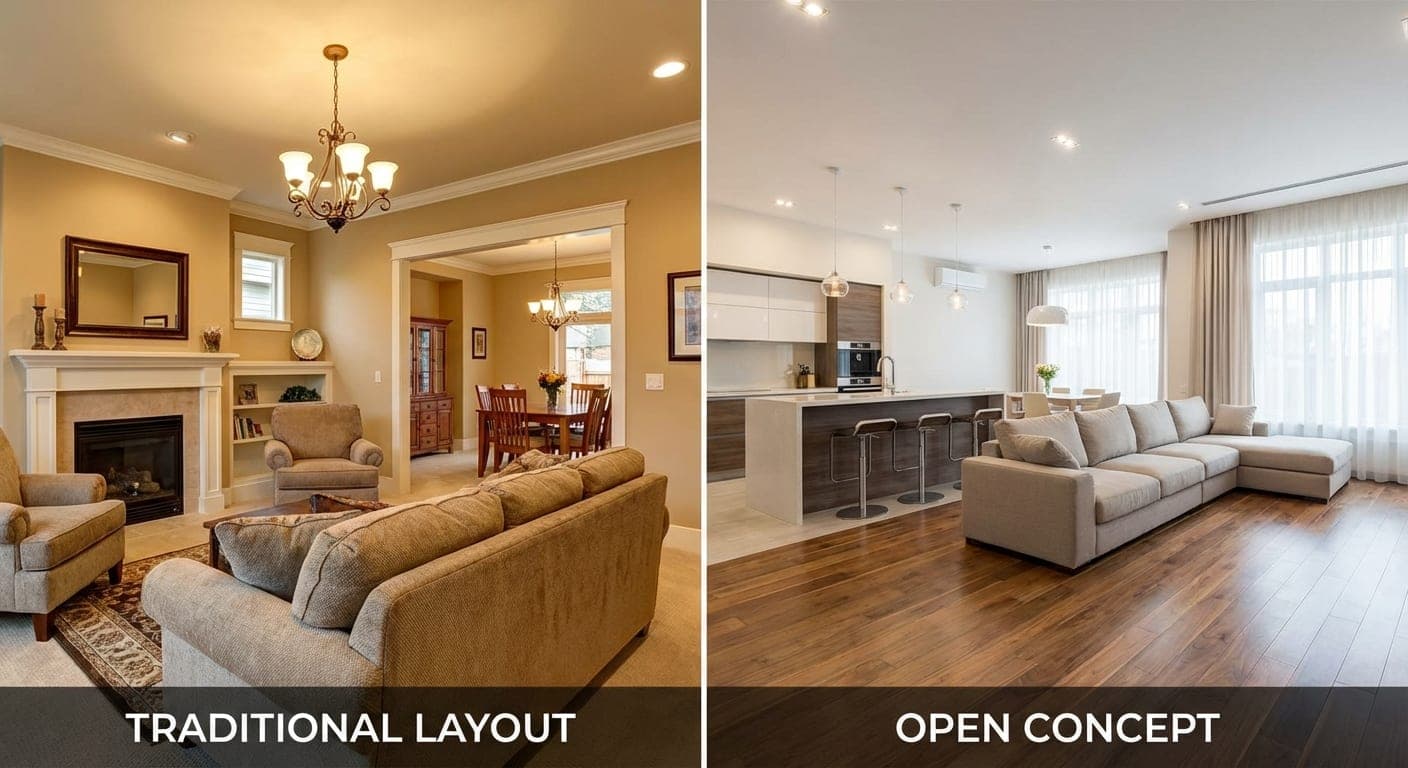
In the world of construction and renovation, few design decisions spark as much debate and client deliberation as the choice between an open concept and a traditional layout. As contractors, you're often at the forefront of translating these visions into reality, guiding clients through the intricacies and implications of each approach. Understanding the nuances, benefits, and challenges of both is crucial for advising your clients effectively and ensuring project success.
The Allure of Open Concept Layouts
Open concept design, characterized by large, communal spaces where rooms like the kitchen, living room, and dining area flow seamlessly into one another, has dominated residential trends for decades. It's a hallmark of modern living, emphasizing connectivity and spaciousness.
Benefits:
- Enhanced Natural Light: With fewer walls obstructing windows, natural light can penetrate deeper into the home, creating a brighter, more inviting atmosphere.
- Improved Social Interaction: Ideal for entertaining, an open layout allows hosts to interact with guests while preparing food, fostering a more communal experience.
- Perceived Larger Space: Eliminating walls creates an illusion of greater square footage, making even modest homes feel expansive.
- Modern Aesthetic: This layout inherently aligns with contemporary design sensibilities, offering a sleek and uncluttered look.
- Flexibility in Furnishing: Clients can often reconfigure furniture arrangements with greater ease, adapting the space to different needs or occasions.
Challenges:
- Lack of Privacy & Noise Issues: Sound travels freely, making it difficult to find quiet corners or have private conversations.
- Heating & Cooling Efficiency: Large, undifferentiated spaces can be harder and more costly to heat and cool evenly, requiring robust HVAC systems.
- Clutter Visibility: Without walls to hide messes, an open layout demands more diligent tidiness.
- Odor Spread: Cooking odors can permeate the entire living space, lingering longer.
- Structural Considerations: Removing load-bearing walls often requires significant structural reinforcement (e.g., steel beams), adding complexity and cost to the project.
The Enduring Appeal of Traditional Layouts
Traditional layouts, with their distinct, separated rooms, offer a classic and timeless approach to home design. Each space has a defined purpose, providing clear boundaries and often a sense of coziness and order.
Benefits:
- Defined Spaces & Privacy: Separate rooms offer privacy for various activities, from quiet study to focused work or undisturbed relaxation.
- Better Noise Control: Walls act as natural sound barriers, containing noise within individual rooms.
- Energy Efficiency: Zoned heating and cooling are more effective, allowing homeowners to heat or cool only the rooms they are actively using.
- Easier to Contain Clutter & Odors: Messes and cooking smells are largely confined to their respective rooms.
- Classic & Timeless Appeal: Many clients appreciate the historical context and architectural integrity of traditional room separation.
Challenges:
- Can Feel Cramped & Dark: Multiple walls can break up sightlines and block natural light, potentially making spaces feel smaller and darker.
- Limited Social Interaction: Guests and family members might feel more separated during gatherings.
- Less Natural Light Penetration: Light sources are often limited to individual rooms, reducing overall brightness.
- Less Flexible for Redecorating: Repurposing a room can be challenging due to its fixed boundaries and often built-in features.
- Higher Material Costs (Sometimes): More walls, doors, and trim elements can sometimes accumulate higher material costs.
Practical Considerations for Contractors: Key Takeaways
Your role extends beyond mere construction; it's about translating a client's dream into a functional reality. Here's what to keep in mind:
- Client Lifestyle is Paramount:
- Families with young children: Open concepts allow supervision, but traditional offers quiet zones.
- Frequent entertainers: Open concept excels for large gatherings.
- Work-from-home professionals: Traditional layouts provide essential privacy and quiet.
- Budget Implications: Be transparent about the costs associated with structural modifications for open concepts (e.g., beams, column wraps, HVAC redesign) versus the material and labor costs for additional walls and doors in traditional designs.
- Structural Integrity: Always assess load-bearing walls. Removing them is a significant undertaking requiring engineering consultation, proper permitting, and often steel beam installation, which affects ceiling height and aesthetics.
- Acoustics & HVAC in Open Spaces: Advise clients on solutions like acoustic panels, rugs, and strategic furniture placement. Discuss multi-zone HVAC systems for efficient temperature control.
- Lighting Design: Crucial for both. In open concepts, a layered lighting plan (ambient, task, accent) is vital to define zones and ensure even illumination. For traditional, focus on maximizing light within each defined space.
- Resale Value: While open concepts are popular, a well-designed traditional layout always has its market. A hybrid approach, often called "broken plan," offering partial separation, can offer the best of both worlds and broad appeal.
- Utility Rerouting: Removing walls often means rerouting electrical, plumbing, and HVAC lines, which can be complex and costly.
Ultimately, there's no universally "better" choice. The ideal layout hinges entirely on the client's specific needs, lifestyle, budget, and the architectural limitations of the existing structure. As a trusted contractor, your expertise in highlighting these practical considerations will empower clients to make informed decisions that result in a home they truly love for years to come.