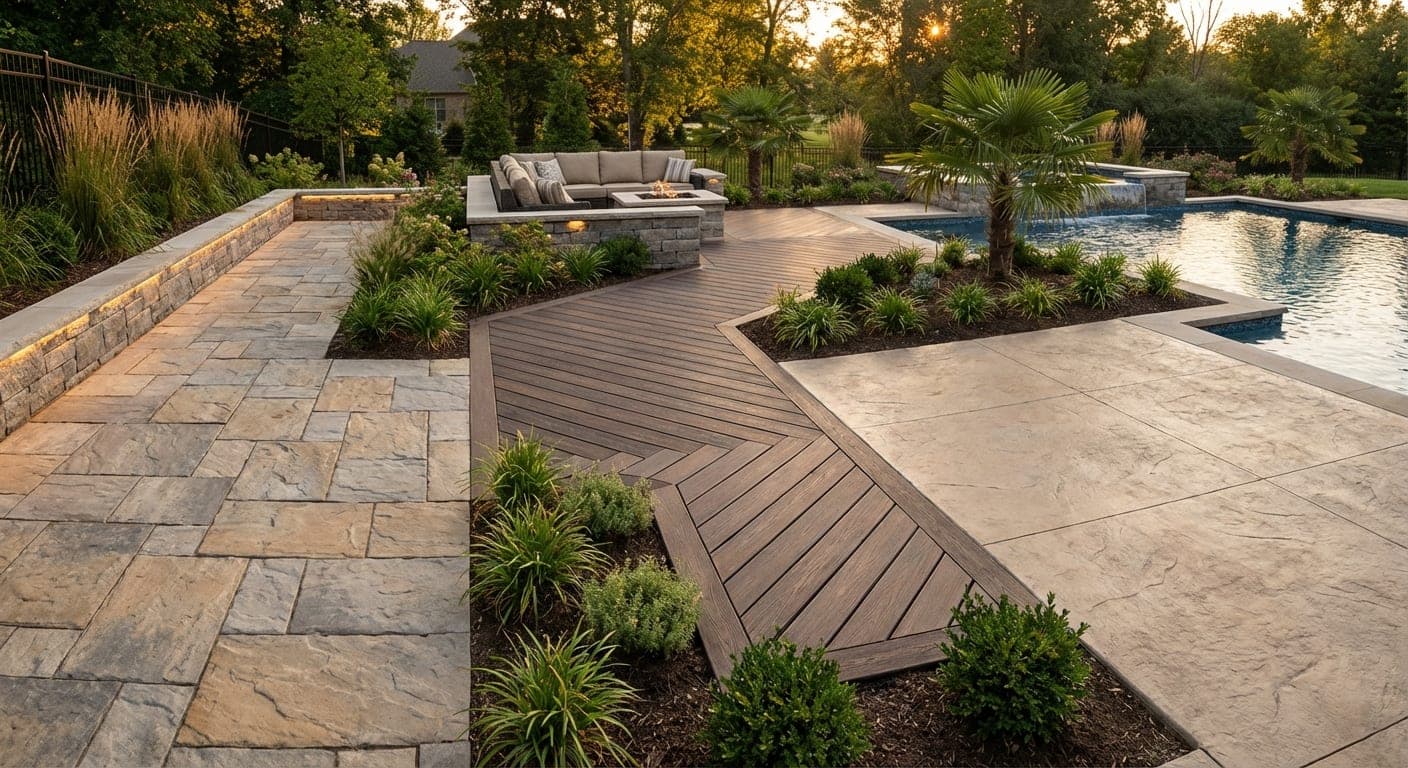
Choosing the optimal pool deck material is a critical decision that impacts not only the aesthetics of a project but also its long-term durability, safety, and client satisfaction. As contractors and landscape designers, our expertise in navigating the myriad of options is invaluable. A well-selected pool deck can transform an outdoor space, enhance property value, and provide years of enjoyment. Conversely, a poor choice can lead to costly repairs, safety hazards, and client frustration. This comprehensive guide delves into the pros and cons of popular pool deck materials, empowering you to make informed recommendations that stand the test of time.
Poured Concrete
- Pros:
- Cost-Effective: Often the most budget-friendly option for large areas.
- Durability: Long-lasting with proper installation and maintenance.
- Versatility: Can be stamped, stained, or textured to mimic other materials like stone or tile.
- Seamless Look: Offers a smooth, continuous surface.
- Cons:
- Cracking Potential: Susceptible to cracks from ground movement, freeze-thaw cycles, or improper installation.
- Heat Absorption: Can get very hot in direct sunlight, especially darker shades.
- Slippery When Wet: Untextured concrete can be dangerously slick; requires finishes like broom finishes for slip resistance.
- Repair Challenges: Repairs often involve patching, which can be noticeable.
Pavers (Concrete, Brick, Natural Stone)
- Pros:
- Repair & Replacement: Individual units can be easily replaced if damaged.
- Drainage: Gaps between pavers allow for natural water drainage, reducing puddling.
- Slip Resistance: Many paver types offer inherent texture, improving grip.
- Aesthetic Variety: Available in an extensive range of colors, shapes, sizes, and patterns.
- Cooler Surface: Lighter colored pavers tend to absorb less heat than poured concrete.
- Flexibility: Less prone to cracking than concrete slabs because they can flex with minor ground shifts.
- Cons:
- Weed Growth: Weeds can sprout between pavers if joints are not properly filled and maintained.
- Unevenness: Over time, pavers can settle unevenly if the base preparation is inadequate.
- Higher Initial Cost: Generally more expensive per square foot than basic poured concrete.
- Maintenance: Requires periodic sweeping and potentially polymeric sand replenishment to maintain joint integrity.
Natural Stone (Travertine, Limestone, Sandstone, Granite)
- Pros:
- Premium Aesthetics: Offers unparalleled natural beauty, luxury, and unique patterns.
- Cool Underfoot (Travertine): Travertine, in particular, is known for staying remarkably cool in direct sun.
- Durability: Very long-lasting and resistant to wear when properly sealed.
- Slip Resistance: Many natural stones, especially those with a tumbled or sandblasted finish, offer excellent grip.
- Value Addition: Significantly increases property value and curb appeal.
- Cons:
- High Cost: Often the most expensive option, both for material and installation.
- Maintenance: Requires regular sealing to prevent staining and protect against weathering.
- Porousness: Some stones (e.g., sandstone, limestone) are highly porous and susceptible to staining without proper sealing.
- Weight: Can be heavy, requiring robust substrate preparation.
Wood and Composite Decking
- Pros:
- Aesthetics: Offers a warm, natural look (wood) or consistent, modern appearance (composite).
- Feel: Comfortable underfoot, often cooler than masonry surfaces.
- Elevated Design: Ideal for creating multi-level spaces or dealing with sloped terrain.
- Splinter-Free (Composite): Composite materials eliminate splinters, rotting, and insect damage.
- Cons:
- Maintenance (Wood): Requires regular staining, sealing, and cleaning to prevent rot, warping, and splintering.
- Slippery When Wet: Can become very slick, especially wood with algae growth or poorly textured composite.
- Heat Absorption (Dark Composite): Darker composite boards can get extremely hot in direct sun.
- Lifespan: Wood typically has a shorter lifespan than masonry materials, even with maintenance.
- Water Damage: Constant exposure to chlorinated water can degrade wood over time.
Tile (Porcelain, Ceramic)
- Pros:
- Design Versatility: Immense range of colors, patterns, and textures, including those mimicking wood or natural stone.
- Durability: Porcelain, especially, is highly dense, resistant to scratches, stains, and fading.
- Low Maintenance: Easy to clean and generally doesn't require tile sealing (though grout does).
- Water Resistance: Excellent for wet environments.
- Cooling Properties: Lighter tiles can reflect heat well.
- Cons:
- Slippery When Wet: Crucial to select tiles specifically rated for outdoor, wet environments (high DCOF rating).
- Installation Complexity: Requires precise leveling, grouting, and proper substrate preparation.
- Grout Maintenance: Grout lines can stain, crack, or harbor mildew if not properly sealed and cleaned.
- Cracking: Susceptible to cracking from impact or freeze-thaw cycles if not properly installed.
Key Considerations for Material Selection
- Slip Resistance: A non-negotiable safety priority. Always recommend materials or finishes with a high coefficient of friction when wet.
- Heat Absorption: Especially in warmer climates, lighter colors and materials like travertine will be significantly cooler underfoot.
- Durability & Longevity: Assess the client's budget and desired lifespan. Some materials offer decades of service with minimal upkeep, while others require more attention.
- Maintenance Requirements: Be transparent about cleaning, sealing, and repair expectations. A low-maintenance deck is often a highly valued feature.
- Cost (Initial & Long-term): Break down not just the upfront material and installation costs, but also the projected maintenance expenses over the deck's lifespan.
- Aesthetics & Design Integration: The material should complement the home's architecture, existing landscaping, and the client's personal style.
- Climate Suitability: Consider freeze-thaw cycles, sun exposure, and heavy rain. Some materials perform better in specific environmental conditions.
Practical Advice for Contractors
- Prioritize Safety: Always lead with slip resistance and comfortable heat retention as primary concerns.
- Educate Your Clients: Present the pros and cons clearly, using samples where possible. Help them understand the long-term implications of their choices.
- Consider the Substrate: The foundation is as critical as the surface material. Proper grading, drainage, and compaction are essential for longevity.
- Factor in Local Regulations: Be aware of any local building codes or HOA restrictions that might influence material choices or installation methods.
- Offer Value, Not Just Price: Frame discussions around the overall value proposition – including aesthetics, durability, and maintenance – rather than solely focusing on the lowest upfront cost.
Conclusion
Selecting the ideal pool deck material is a nuanced process that demands a blend of aesthetic vision, practical understanding, and technical expertise. By thoroughly understanding the characteristics, benefits, and drawbacks of each option, you can confidently guide your clients toward a pool deck solution that is safe, beautiful, durable, and perfectly suited to their lifestyle and budget. Your informed recommendations build trust and ensure the successful delivery of a cherished outdoor living space.