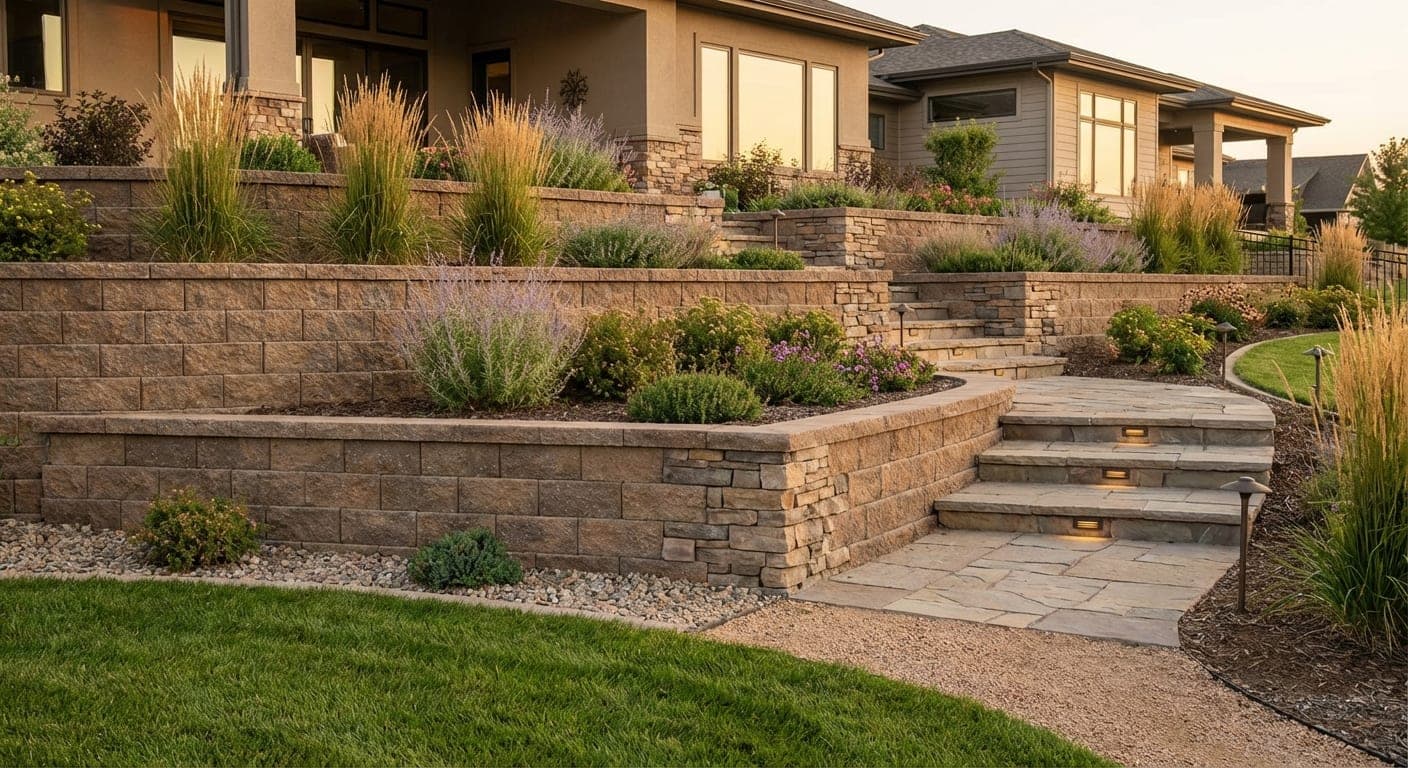
The Foundation of Form and Function: Mastering Retaining Wall Solutions
In landscape design and site development, retaining walls are often more than just an aesthetic feature – they are critical structural elements that can define a space, prevent erosion, and create usable land out of challenging topography. For contractors and construction professionals, understanding the multifaceted nature of retaining wall solutions is paramount to delivering safe, durable, and visually appealing projects.
While clients might initially focus on the visual appeal of a stacked stone or modular block wall, we know that the true value lies beneath the surface. A properly engineered and constructed retaining wall provides essential grade change management, soil stabilization, and can even contribute to effective water management on a property. Ignoring the technical aspects in favor of mere aesthetics is a recipe for structural failure, costly repairs, and reputational damage.
Beyond the Facade: Why Retaining Walls Demand Expertise
Retaining walls serve several crucial functions:
- Grade Separation: They allow for changes in elevation, creating flat, usable areas on sloped sites for patios, driveways, or garden beds.
- Erosion Control: By holding back soil, they prevent erosion and runoff, protecting foundations, walkways, and valuable topsoil.
- Foundation Protection: In some cases, they can divert water and pressure away from building foundations, safeguarding structural integrity.
- Landscape Definition: Aesthetically, they can create terraced gardens, define planting beds, and add architectural interest to outdoor spaces.
The forces acting on a retaining wall are significant, including active earth pressure, hydrostatic pressure from water, and potential surcharge loads from structures, vehicles, or even heavy landscaping above. This makes meticulous planning and execution non-negotiable.
Critical Considerations for Every Project
Before breaking ground, a thorough assessment is essential:
- Soil Analysis: Understanding soil type, bearing capacity, and drainage characteristics is foundational. Clay, sand, loam – each presents unique challenges and opportunities.
- Drainage: Perhaps the single most important factor. Adequate drainage behind and within the wall prevents hydrostatic pressure buildup, which is a leading cause of wall failure. Options include granular backfill, weep holes, and perforated drain pipes.
- Load Requirements: Assess the forces the wall will need to withstand. Will there be a driveway above it? A heavy planter? A building foundation? This dictates design and material strength.
- Wall Height and Slope: Taller walls and steeper slopes invariably require more robust engineering, often including geogrid reinforcement or deeper foundations.
- Material Selection: Beyond aesthetics, consider durability, lifespan, maintenance requirements, and the wall's ability to resist local environmental factors (freeze-thaw cycles, moisture).
- Local Codes and Permits: Always check municipal regulations. Many jurisdictions require engineered plans and permits for walls over a specific height (e.g., 3 or 4 feet).
Common Retaining Wall Solutions and Their Applications
The choice of material and construction method depends heavily on project specifics, budget, and aesthetic goals:
- Segmental Retaining Walls (SRW): These interlocking concrete block systems are incredibly versatile and popular for their relatively easy installation (for smaller walls), variety of finishes, and ability to handle curves. Many systems allow for geogrid reinforcement for taller applications.
- Cast-in-Place Concrete Walls: Offering superior strength and durability, these walls are ideal for heavy load-bearing applications, very tall walls, or where a custom design and finish (stamping, staining) is desired. They require significant formwork and proper rebar placement.
- Timber or Railroad Tie Walls: A more rustic and often more economical option for lower walls. However, their lifespan is limited by rot and insect degradation, typically 10-20 years depending on treatment and environment. Proper drainage is crucial to extend their life.
- Gabion Walls: Cages filled with rock, gabions are highly permeable, robust, and can be an excellent solution for erosion control, retaining soil in challenging conditions, or creating a unique industrial aesthetic. They dissipate water energy effectively.
- Natural Stone or Boulder Walls: Offering unmatched aesthetic appeal, these walls can be dry-stacked or mortared. Dry-stacked walls rely on gravity and interlocking stones, while mortared walls provide greater rigidity. Both require skilled craftsmanship and proper foundation work.
Key Takeaways for Successful Retaining Wall Projects
To ensure lasting success and client satisfaction, keep these principles top of mind:
- Prioritize Drainage: Never underestimate the power of water. A comprehensive drainage plan is non-negotiable for longevity.
- Engage an Engineer: For any wall beyond basic garden height, or with significant surcharge, consulting a structural engineer is not an option, but a requirement. It's an investment that prevents catastrophic failure.
- Understand Soil Mechanics: Every site is unique. Soil reports provide critical data for appropriate design and material selection.
- Invest in Quality Materials: Skimping on materials or backfill can lead to premature failure and costly remediation.
- Educate Your Client: Help clients understand the cost-benefit analysis of different solutions, highlighting the importance of engineering and proper installation over initial cost savings.
- Master Compaction: Proper compaction of backfill in lifts is crucial to prevent settlement and ensure the wall functions as designed.
Retaining walls are complex structures that demand a blend of engineering acumen, construction expertise, and an eye for landscape integration. By approaching each project with a thorough understanding of the forces at play and a commitment to best practices, contractors can deliver retaining wall solutions that are not only beautiful but will stand strong for decades to come, enhancing both the functionality and value of any property.