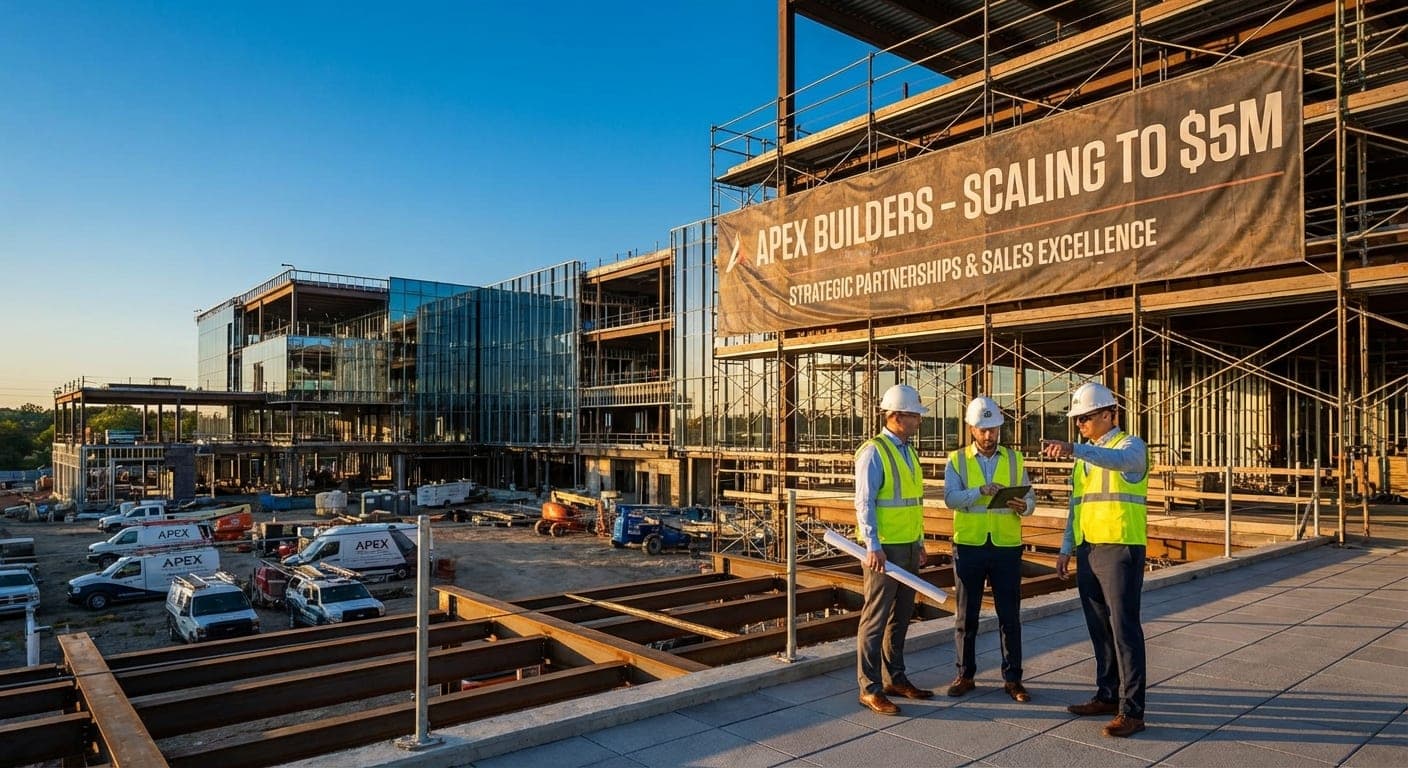
The $5 Million Leap: How Sales Strategy Drives Contracting Business Growth
Reaching the first million in revenue for your contracting business is a monumental achievement, a testament to your hard work, skill, and dedication. But the journey from $1 million to $5 million, or even beyond, isn't simply about doing more of the same. It requires a fundamental shift in perspective, particularly concerning your sales strategy. This isn't just about winning bids; it's about building a repeatable, scalable engine for growth.
Beyond the Tools: A Strategic Sales Mindset
Many contractors excel at their craft, but scaling demands a CEO's mindset focused on systemic growth. Your sales strategy transforms from an ad-hoc process to a core business function that informs everything from project selection to team structure. The goal is predictable revenue generation, not just sporadic wins.
Refine Your Niche and Ideal Client Profile
General contractors can do a lot of things, but generalists often struggle to scale efficiently. To reach $5M, you need to be precise. Who are your most profitable clients? What types of projects yield the best margins and align with your team's strengths?
- Identify High-Profit Projects: Analyze past projects to pinpoint those that were most profitable and least problematic. Are they in a specific sector (e.g., high-end residential remodels, light commercial build-outs, specialized infrastructure)?
- Understand Client Pain Points: What specific challenges do your ideal clients face that your business is uniquely positioned to solve? Tailor your sales message to address these directly.
- Focus Your Marketing: Direct your marketing efforts (website, social media, networking) towards attracting these specific clients and projects. Don't be everything to everyone.
Build a Scalable Sales Process, Not Just Ad-Hoc Bidding
As you grow, relying solely on owner-led sales becomes a bottleneck. You need a structured, repeatable process that anyone on your sales team can follow. This system ensures consistency and efficiency.
- Standardize Lead Qualification: Develop clear criteria for qualifying leads. Don't waste valuable time on projects that don't fit your niche or profitability goals.
- Professionalize Proposal Development: Move beyond basic bids. Create compelling, value-driven proposals that clearly articulate your unique selling propositions and demonstrate your expertise. Use templates and standardized components.
- Implement a CRM System: A Customer Relationship Management (CRM) system is non-negotiable. It allows you to track leads, manage client communications, monitor sales pipelines, and analyze performance data.
- Define Follow-Up Protocols: Establish clear guidelines for how and when to follow up with prospects throughout the sales cycle. Persistence and professionalism are key.
Invest in Your Sales Engine: People and Partnerships
You can't do it all yourself. To scale, you'll need to either dramatically improve your own sales acumen or build a competent sales team.
- Train Your Team: Whether it's a dedicated sales professional or project managers who handle client interactions, invest in sales training. Teach them negotiation, client communication, and how to articulate your company's value.
- Empower Delegation: Learn to delegate aspects of the sales process. This frees you up to focus on strategic growth and high-level client relationships.
- Cultivate Strategic Partnerships: Forge relationships with architects, designers, real estate developers, and other complementary businesses. These can become consistent sources of qualified referrals.
- Master Referral Programs: Implement formal programs to encourage past clients to refer new business. Happy clients are your best advocates.
Leverage Technology and Data for Smarter Decisions
Guesswork is costly. Data-driven insights can significantly enhance your sales strategy.
- CRM Analytics: Use your CRM to identify trends in win rates, average project values, lead sources, and sales cycle lengths.
- Marketing Automation: Explore tools that automate lead nurturing, email campaigns, and prospect engagement to keep your company top-of-mind.
- Estimating Software: Ensure your estimating process is accurate and efficient, allowing for quick turnaround on competitive, profitable bids.
Master the Art of Upselling and Cross-selling
The easiest sale is often to an existing client. Maximizing the value of each project and client relationship is a powerful growth lever.
- Identify Value-Added Services: Beyond the core scope, what additional services or upgrades could genuinely benefit your client and enhance their project? Think long-term maintenance contracts, smart home integrations, or premium finishes.
- Educate Your Clients: Present these options not as extra costs, but as valuable investments that solve problems or enhance the final outcome.
Financial Discipline: Pricing for Profit, Not Just Revenue
Growing to $5M means nothing if you're not profitable. Your sales strategy must be inextricably linked to sound financial principles.
- Accurate Costing: Understand every direct and indirect cost associated with a project.
- Value-Based Pricing: Don't just compete on price. Articulate the unique value you bring (quality, reliability, efficiency, problem-solving) and price accordingly.
- Manage Overhead: As you grow, keep a close eye on your overhead. Ensure that increased revenue isn't just funding bloated expenses.
Scaling to $5 million is an exhilarating journey that demands more than just building quality projects; it demands building a robust, strategic sales machine. By refining your niche, systematizing your sales process, investing in your team, and leveraging technology, you can transform your contracting business into a powerhouse capable of sustainable, profitable growth. The blueprint for your next level of success lies in your sales strategy.