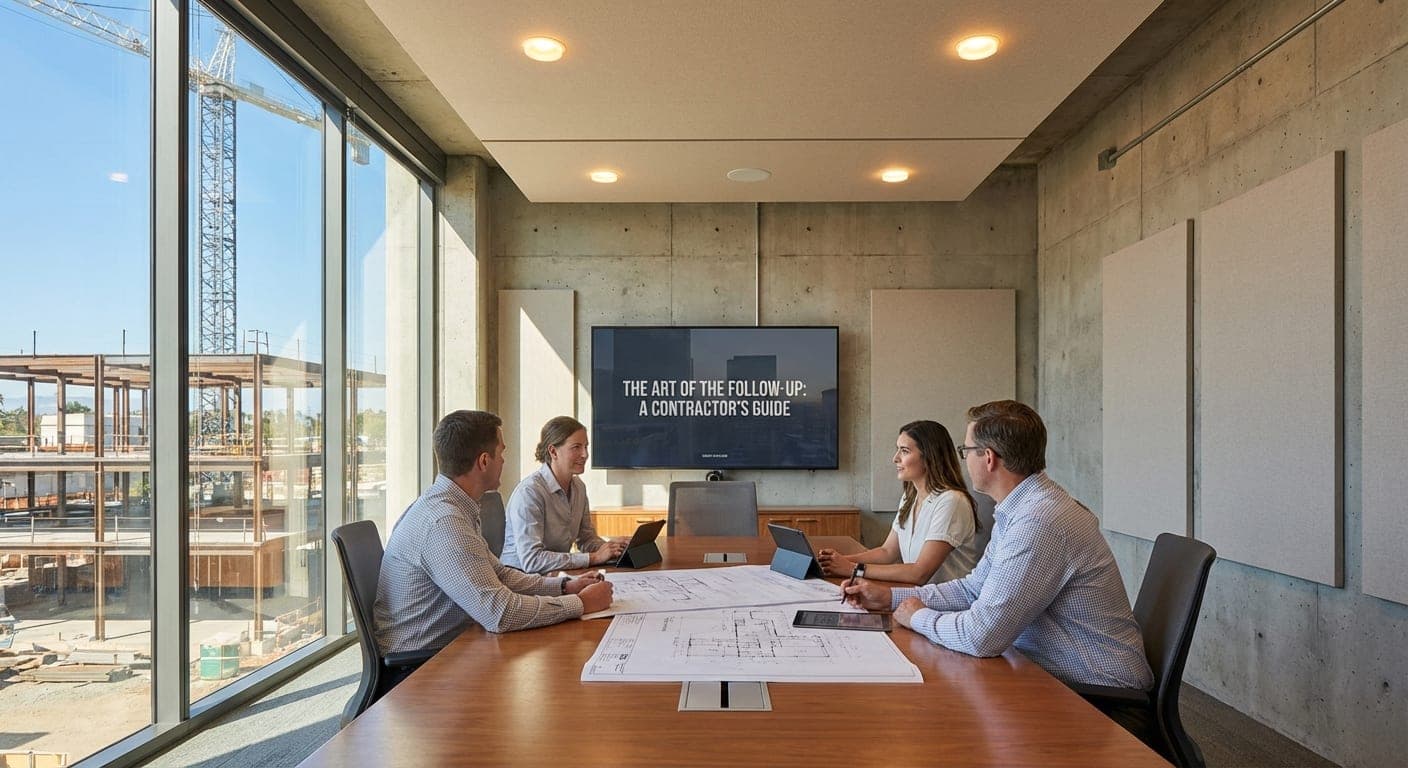
The Art of the Follow-Up: A Contractor’s Guide to Sealing the Deal
In the competitive world of construction, securing a project often hinges on more than just submitting a stellar bid. You've poured your expertise into a meticulously crafted proposal, showcasing your capabilities, outlining costs, and highlighting your unique value. But what happens after that proposal leaves your hands? For many contractors, the journey ends there, leaving potential projects in a state of limbo. This is where the true differentiator emerges: the art of the follow-up.
Far from being an annoyance, strategic follow-up is a critical component of your sales strategy. It's about demonstrating professionalism, reinforcing your commitment, and ultimately, building the trust that transforms a potential client into a signed contract. Neglecting this crucial step isn't just a missed opportunity; it's a direct pathway to losing bids to competitors who understand its power.
Why Follow-Up Isn't Optional – It's Essential
For contractors, time is money, and every moment spent chasing a lead needs to be productive. Here's why consistent, intelligent follow-up is non-negotiable:
- Reinforces Your Commitment: It shows you're serious about the project and committed to earning their business.
- Builds Trust and Rapport: Each touchpoint is an opportunity to strengthen the relationship, answer questions, and alleviate concerns.
- Uncovers Hidden Objections: Clients often won't voice their concerns upfront. Follow-up allows you to dig deeper and address potential roadblocks.
- Keeps You Top-of-Mind: Decision-makers are busy. A timely follow-up ensures your proposal doesn't get buried under a pile of other responsibilities.
- Differentiates You: Many contractors submit bids and wait. Proactive follow-up immediately sets you apart as professional and client-focused.
- Educates and Informs: It's a chance to provide additional value, share relevant case studies, or clarify complex aspects of the project.
Mastering the Elements of Effective Follow-Up
Think of follow-up not as badgering, but as a strategic communication sequence designed to move the conversation forward. Here are the core elements:
- Timeliness is King: The initial follow-up post-proposal is critical. Aim for within 24-48 hours. A prompt response demonstrates efficiency and enthusiasm.
- Personalization is Paramount: Avoid generic "just checking in" messages. Reference specific project details, previous conversations, or unique client needs. Show them you remember their project and their vision.
- Always Add Value: Each follow-up should offer something new. This could be answering an anticipated question, clarifying a technical point, providing a relevant testimonial, sharing a link to similar work, or offering to walk them through the proposal again. The goal is to move the needle, not just ping them.
- Multi-Channel Approach: Don't rely solely on email. A well-placed phone call can be incredibly effective. Consider a combination of email, phone calls, and potentially even a text message (if appropriate and agreed upon) over the follow-up sequence.
- Strategic Persistence (Not Annoyance): There's a fine line between persistent and pushy. Develop a structured follow-up plan that includes multiple touchpoints spaced strategically. If you haven't heard back after several attempts over a reasonable period (e.g., 2-3 weeks, depending on project size), a final "break-up" email can sometimes prompt a response or allow you to gracefully move on.
Practical Steps for Contractors
Ready to elevate your follow-up game? Implement these actionable strategies:
- Implement a CRM or Tracking System: Whether it's a sophisticated software or a simple spreadsheet, log every interaction. Record dates, methods of contact, what was discussed, and the next planned action. This is your memory and your strategy rolled into one.
- Schedule Follow-Ups Religiously: Don't leave it to chance. Immediately after sending a proposal, schedule your first 2-3 follow-up points in your calendar or CRM.
- Prepare Compelling Messages: Have templates ready for different stages of the follow-up, but always customize them. Focus on benefit-driven language and clear calls to action (e.g., "Would you be available for a brief call to discuss any questions?").
- Listen More Than You Talk: When you do connect, ask open-ended questions designed to uncover needs, concerns, or decision-making timelines. "What are your main priorities for this project right now?" or "Are there any aspects of the proposal that give you pause?"
- Anticipate and Address Objections: Based on your experience, you can often predict client concerns (e.g., budget, timeline, specific materials). Address these proactively in your follow-ups with solutions or clarifications.
- Don't Neglect "Cold" Leads: Just because a project didn't move forward immediately doesn't mean it's dead. A periodic, low-pressure touchpoint (e.g., "We recently completed a similar project...") can reignite interest months later.
- Know When to Move On: Respect a client's definitive "no" or a complete lack of response after your structured follow-up sequence. Your time is valuable.
The art of the follow-up isn't just a sales tactic; it's a cornerstone of relationship building and a testament to your professionalism. By mastering this critical skill, you'll not only increase your bid-to-win ratio but also cultivate stronger client relationships, paving the way for future referrals and repeat business. Make follow-up an integral, intentional part of your contracting process, and watch your success build, project by project.