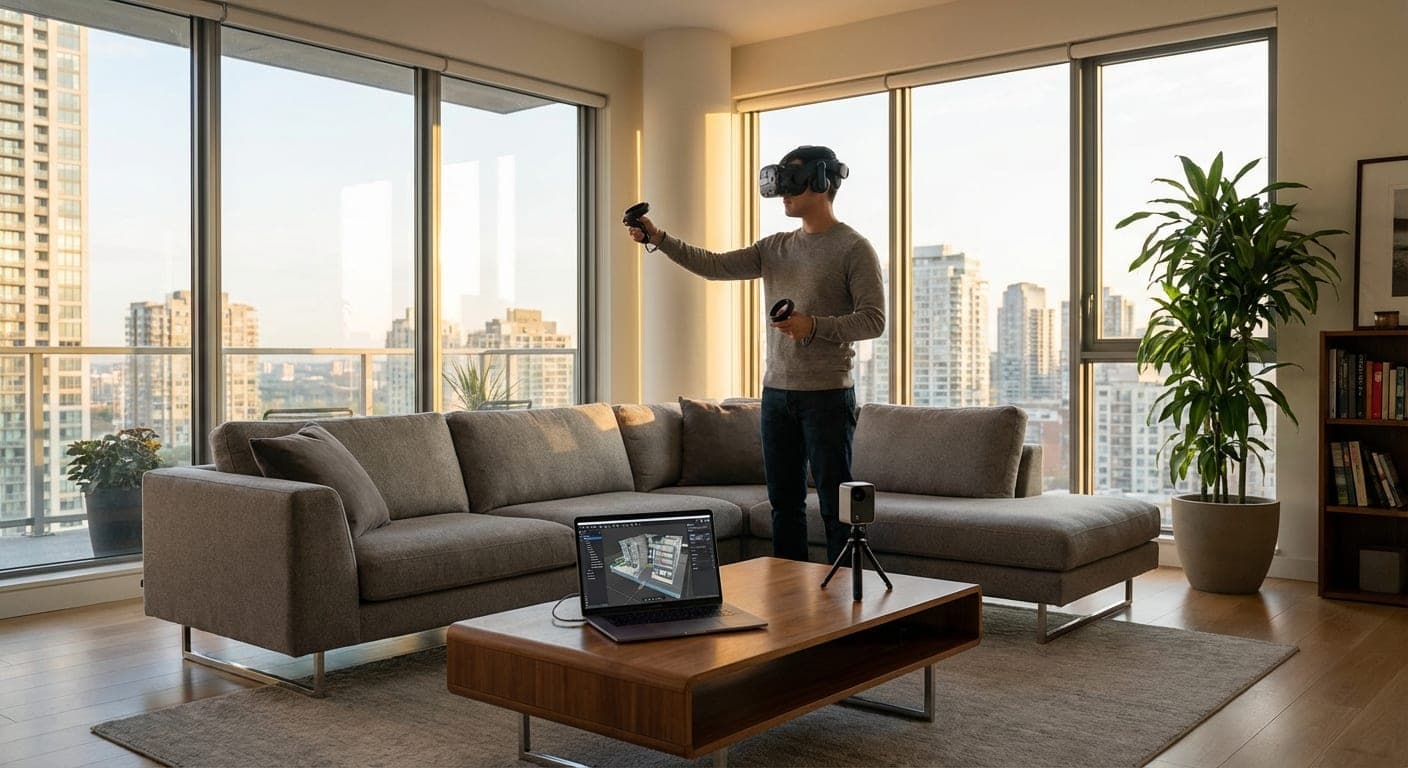
Virtual Reality Walkthroughs: The Next Frontier in Construction
The construction industry is constantly evolving, driven by the relentless pursuit of efficiency, accuracy, and client satisfaction. While 2D blueprints and even advanced 3D models have long been our trusted companions, they often leave a gap between technical design and real-world perception. Enter Virtual Reality (VR) walkthroughs – an immersive technology rapidly transforming how we visualize, plan, and execute projects.
Far beyond a mere gimmick, VR walkthroughs are becoming an indispensable tool, offering a dynamic, interactive experience of a project long before ground is even broken. This isn't just about viewing a model; it's about stepping inside it, navigating spaces, and interacting with elements as if they were already built. For the modern contractor, this represents not just an upgrade, but a paradigm shift – the next frontier in project delivery.
Why VR is a Game-Changer for Contractors and Clients
The transition from static images or animated fly-throughs to fully interactive VR environments unlocks unprecedented value across the project lifecycle. It moves beyond abstract representations to tangible, experiential understanding for everyone involved.
- Unparalleled Visualization: Clients can literally "walk" through their future home, office, or facility. This immediate spatial understanding eliminates guesswork and ensures everyone is on the same page regarding design, finishes, and functionality.
- Proactive Problem Solving: Identifying clashes, spatial inefficiencies, or accessibility issues in a virtual environment is far cheaper and easier than discovering them during construction. This significantly reduces costly rework and delays.
- Enhanced Collaboration: VR provides a common, intuitive platform for architects, engineers, subcontractors, and clients to review designs collaboratively, fostering better communication and faster decision-making.
- Reduced Change Orders: By allowing clients to experience and refine their vision pre-construction, the likelihood of expensive changes mid-project plummets, leading to smoother projects and happier clients.
Practical Benefits Across Project Stages
The advantages of integrating VR walkthroughs extend to every phase of a construction project:
- Pre-Construction & Design:
- Detailed Design Reviews: Conduct immersive reviews with stakeholders to scrutinize every detail, from material textures to lighting conditions, ensuring aesthetic and functional alignment.
- Constructability Analysis: Engineers and site managers can virtually walk through complex installations, identifying potential construction challenges or sequencing issues before they arise.
- BIM Integration: Leveraging existing Building Information Models (BIM) as the foundation for VR walkthroughs ensures data accuracy and a seamless transition from design to immersive experience.
- Client Engagement & Approvals:
- Realistic Expectations: Clients gain a clear, unambiguous understanding of the final product, leading to greater satisfaction and fewer disputes.
- Faster Sign-offs: Immersive experiences accelerate decision-making, as clients can confidently approve designs once they've experienced them first-hand.
- Powerful Marketing & Sales Tool: For speculative builds, VR walkthroughs can be a powerful asset, allowing potential buyers or investors to explore properties before they exist, speeding up sales cycles.
- Training & Safety:
- Virtual Safety Drills: Simulate hazardous environments or complex procedures for worker training, improving safety awareness without real-world risks.
- Site Orientation: Familiarize new personnel with site layouts, equipment locations, and emergency exits in a controlled virtual setting.
Implementing VR: Practical Advice for Contractors
Ready to embrace this powerful technology? Here's how to get started:
- Leverage Your BIM Investment: If you're already using BIM, you have the fundamental 3D models required for VR. Focus on enhancing model detail for a richer VR experience.
- Choose the Right Tools & Partners: Evaluate VR software that integrates with your existing CAD/BIM tools. Consider partnering with specialized VR visualization firms if developing in-house capabilities isn't feasible initially. Platforms range from simple desktop VR viewers to sophisticated multi-user collaboration tools.
- Invest in Accessible Hardware: While high-end VR headsets offer superior immersion, consumer-grade options like Oculus Quest provide excellent value and portability for client presentations and initial team exploration.
- Start Small, Learn, and Scale: Begin with a pilot project – perhaps a key client presentation or an internal constructability review. Gather feedback, refine your process, and gradually expand its application.
- Train Your Team: Ensure key personnel understand how to prepare models for VR, operate the hardware, and guide users through experiences.
The Road Ahead
Virtual Reality walkthroughs are more than just a novelty; they are an evolutionary step in construction technology. By providing an unparalleled level of visual comprehension and collaborative power, they empower contractors to deliver projects with greater precision, fewer surprises, and significantly enhanced client satisfaction. As this technology continues to mature, integrating more AI-driven analytics and predictive capabilities, its role in defining the future of construction will only grow stronger. Don't get left behind – step into the future of construction, one virtual walkthrough at a time.